
Recent Recordings by Area Jazz Artists
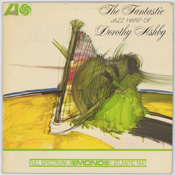
Towards the middle of the last century, four women jazz pianists were honing their art in the high schools of Detroit: Bess Bonnier, Dorothy Ashby, Terry Pollard, and Alice McLeod, who made her career under the name Alice Coltrane. Bonnier remained resolutely behind the keyboard, Pollard would also achieve success as a vibraphonist, and McLeod also become an accomplished harpist and organist. Ashby, however, focused her professional career on playing the harp, an instrument that had no real presence in jazz at the time. She thus had to overcome several forms of prejudice, against her color, gender, and instrument. The harp is difficult to utilize as a jazz instrument because of various technical obstacles, not the least of which is its limited dynamic range; but Ashby was able to master it fully and find ways of adapting it for modern jazz. While most of her Cass Tech fellow students such as Donald Byrd and Kenny Burrell moved on to New York, she stayed in Detroit, performing on piano and harp, which became her main instrument. In 1956 she made her first album, The Jazz Harpist, recorded in Rudy Van Gelder’s studio in New Jersey for the Regent label, in quartet format with Frank Wess on flute. The repertoire consisted of standards and her own compositions. This was followed by three quartet LPs with similar mix of originals and well-known tunes, very much in the same Detroit-flavored modern bop style, including the 1961 Soft Winds that also featured the piano and vibraphone of the magnificent Terry Pollard, and a trio date recorded the same year. Four years later she was taken on by the major label, Atlantic, which placed her in a different setting.
The Fantastic Jazz Harp of Dorothy Ashby was recorded in New York in 1965, with Richard Davis on bass, Grady Tate on drums, with percussionist Willie Bobo and a quartet of stellar trombonists (Jimmy Cleveland, Quentin Jackson, Sonny Russo, and Tony Studd, the latter presumably on bass trombone) added on most tracks. Long officially unavailable, even if some bootlegs have appeared outside of the U.S., it is finally being legitimately re-released in vinyl format by New Land Records, expertly remastered from the original studio tapes. Six decades is a long time to wait, and thus the label is to be congratulated for making this one accessible once again because it fills an important gap in Ashby’s discography, as the harpist was then moving away from the strict Motor City bop of her formative years to follow a musically eclectic path. The rhythms are funkier, with Bobo’s laid-back conga signaling a more popular direction, in line with the times. The repertoire still contains several originals, but there is only one jazz standard, Bronislaw Kaper’s “Invitation,” while two songs were taken from recent Broadway shows: “I Will Follow You” from the musical Milk and Honey and “Feeling Good” from The Roar of the Greasepaint – The Smell of the Crowd. Two folk songs are included: “The House of the Rising Sun” that was much in vogue at the time and turned into a big hit a year earlier by the British rockers of The Animals. Ashby’s version is faster and more swinging than other current versions and includes a nice, albeit short trombone solo by Jimmy Cleveland. The final track is unexpected: a jazzy version of the popular Israeli love song “Dodi Li,” often sung at weddings. All of this recalls other Atlantic records of the time that were designed to make jazz that would appeal to a broader audience. In Ashby’s case, it signaled an interest in a broad range of musical styles that led her to move to California and become involved with the studio scene and to work with Stevie Wonder, Billy Preston and others. The albums to follow would develop this direction further, with imaginative arrangements by Richard Evans, culminating with her 1970 album The Rubáiyát of Dorothy Ashby that for many was her greatest achievement, an eclectic soulful spiritual expression rooted in strong rhythm featuring her vocals and Japanese koto playing in addition to her harp. Its roots lie in the record discussed here.

This month also brings us the release of a new album by another brilliant jazz woman with Detroit roots, the late singer Sheila Jordan. A true bop vocalist, she heard Charlie Parker’s recording of “Now’s the Time” on a jukebox while briefly attending Cass Tech High School, eventually heard him in person at the Club Sudan, and never looked back. Jordan eventually moved to New York and developed a serious career in music whilst working a day job and raising her daughter. She never sought pop stardom or played around with “crossover” nonsense. The works that perhaps best epitomizes her vision of pure improvisatory jazz vocalization were her duets with string bass players, eschewing the chordal support of pianists and the rhythmic pulsations of drummers.
While her earliest duet with a bassist reportedly involved Charles Mingus, the first recorded clue to her interest in the format was on her first LP in 1962, Portrait of Sheila, where she and bassist Steve Swallow performed many passages and the whole of one track without accompaniment. According to some reports, she had wanted to do the whole album as a duo with Swallow, but the record company was not sympathetic to this. Her wish came true in Denmark seventeen years later, when she was able to record Sheila with the wonderful local bassist Arild Andersen. She soon teamed up with bassist Harvie Swartz in duet and combo formats in a partnership that lasted decades. Later in her career she also worked extensively with Cameron Brown, who had appeared on her second record, Confirmation, in 1975. Over the years, Jordan made a good number of recordings in studios, but some of her best ones are those captured during performances, and therefore it is wonderful news that Dot Time Records has now released The Concert: Sheila Jordan Harvie S Duo Volume One (Dot Time records), recorded in July of 1983 at Le Jazzé bar in Quebec City during a summer festival. The music was preserved on tape by the sound man and given to Swartz, who only found it again last year.
The tunes played on the first set that takes up this album were ones that Jordan had played and recorded many times before, but she always managed to find new ways of dealing with familiar material. As Harvie S (as he now prefers to be called) mentions in the liner notes, when she was not being recorded, Jordan liked to take more chances, and indeed here she does just that, instilling the music with emotive power; the sheer love of performance almost jumps out from the speakers. The opener was “How Deep is the Ocean, How High is the Sky,” which the duo had recorded less than a year earlier in studio for their Old Time Feeling record, and this version let the audience know that this was going to be a special evening. Jordan, then 54, was in her prime, and the bassist had already established a deep bond with her idiosyncratic approach to jazz vocalizing. After some standards came “Whose Little Angry Man,” which Jordan turned to often and was featured on several of her recorded bass duets, a quirky, otherwise little-known song from the 1973 Broadway musical “Raisin,” and here, as was often the case with this tune, she chanted in a manner that was meant as a tribute to her Cherokee ancestry. She then turned to her bop roots, including a brisk virtuosic version of Parker’s “Confirmation,” and ending the set with Rudy Stevenson’s “The Lady,” her tribute to Billy Holiday, which had been featured on her first duo album with bassist Andersen five years earlier.
For those who were fortunate enough to hear Sheila Jordan in person, this album will remind them of the unique presence and joy of performing that characterized all her performances, captured here in grand style. Those that did not will discover as much of this as can be captured on tape. It is not a perfect performance, and that is what makes it so special, as we hear two very much in-tune artists creating anew a well-structured set of music with abandon and joy. Sit down and listen to the whole thing from beginning to end and await the second volume that is to come.